
May 12 , 2026
Best Knives for Raccoon, Fox, and Small Game Pelting
When it comes to pelting raccoon, fox, and small game, the difference between a clean, market-ready hide and a damaged one often comes down to your knife. Precision, control, and sharpness are everything—and using the right blade for the job can make the entire process faster, easier, and more consistent.
At Wiebe Knives, we design tools specifically for hunters, trappers, and fur handlers who rely on quality results. In this guide, we’ll break down the best knives for pelting small game, what features matter most, and how to build an efficient setup for handling multiple species.
Why Pelting Requires a Specialized Knife
Pelting is different from general skinning. With animals like raccoon, fox, mink, muskrat, and squirrel, the goal isn’t just to remove the hide—it’s to preserve it in top condition.
That means:
-
Avoiding holes or tears
-
Making clean, controlled cuts
-
Working quickly without sacrificing accuracy
A standard hunting knife can work, but a purpose-built pelting knife gives you a clear advantage.
Key Features of the Best Pelting Knives
1. Compact Blade Size for Control
For small game, bigger isn’t better. A small skinning knife with a shorter blade allows for tight, precise movements—especially around legs, head, and tail areas.
2. Thin, Sharp Cutting Edge
Pelting requires a blade that can glide between hide and membrane. Thin, razor-sharp edges reduce resistance and minimize damage to the pelt.
3. Blade Shape for Precision
Triangular or narrow-profile blades are ideal for detailed work, allowing you to make controlled cuts without digging too deep.
4. Comfortable Grip
You’ll often be working with wet or cold hands, so a non-slip, ergonomic handle is essential for safety and consistency.
Best Knife Types for Small Game Pelting
Small Skinning Knives (Pelter-Style Blades)
For raccoon, fox, and similar animals, a pelter-style skinning knife is one of the best tools you can use. These knives are specifically designed for:
-
Mink and muskrat
-
Raccoon and fox
-
Squirrel and rabbit
Their compact size and triangular blade shape make them perfect for precision cuts and hide separation, especially when working around delicate areas.
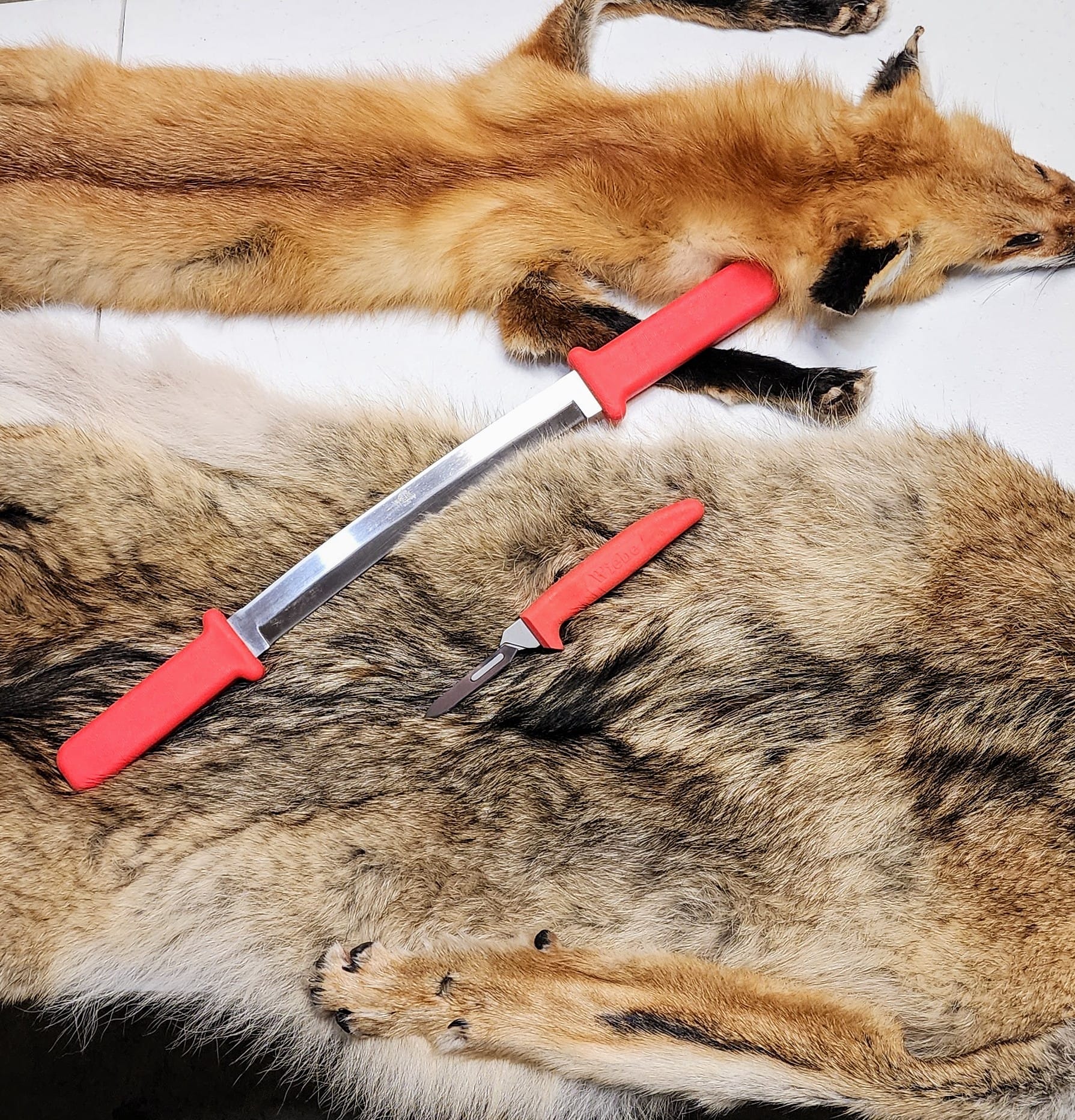
Replaceable Blade Knives for Precision Work
Replaceable blade knives are another excellent option for pelting. With scalpel-sharp blades, they allow you to:
-
Maintain a consistently sharp edge
-
Make clean, accurate cuts
-
Work efficiently across multiple animals
This is especially helpful on a trapline where time and consistency matter.
Specialty Knives for Key Cuts
Certain tools—like hook-style knives—are useful for making quick, consistent cuts such as:
-
Tail cuts
-
Opening cuts (“money cuts”)
-
Initial hide separation
These tools can significantly speed up your workflow while reducing the chance of mistakes.
Matching the Knife to the Animal
Different animals benefit from slightly different approaches:
Raccoon
-
Medium-sized animal with thicker hide
-
Benefits from a slightly larger small skinning knife
-
Precision still critical around legs and face
Fox (Red & Gray)
-
Thinner, more delicate hides
-
Requires fine control and light pressure
-
Smaller blades help avoid damage
Muskrat & Mink
-
Very small, delicate hides
-
Best handled with compact pelter-style knives
-
Sharpness is critical to avoid tearing
Squirrel & Rabbit
-
Quick processing
-
Small, sharp blades allow efficient, clean work
Building an Efficient Pelting Knife Setup
Most experienced trappers don’t rely on just one knife. Instead, they use a simple system that covers each step of the process:
-
Pelter-style skinning knife for main hide removal
-
Replaceable blade knife for detail work and finishing
-
Hook knife (optional) for quick, consistent opening cuts
This combination allows you to work faster while maintaining the quality needed for fur handling.
Tips for Cleaner, Faster Pelting
Even with the right knife, technique matters. Keep these tips in mind:
-
Use short, controlled cuts instead of long slices
-
Let the blade do the work—don’t force it
-
Keep your knife sharp at all times
-
Work carefully around high-risk areas (legs, face, tail)
-
Stay consistent to reduce mistakes across multiple animals
Why the Right Knife Makes All the Difference
When you’re pelting raccoon, fox, or small game, your knife isn’t just a tool—it’s a key part of your results. The right blade helps you:
-
Protect hide quality
-
Work more efficiently
-
Reduce errors and waste
-
Handle more animals in less time
At Wiebe Knives, we build knives specifically for these real-world applications. From small skinning knives to replaceable blade systems, our tools are designed to help you get better results with less effort.
Final Thoughts
If you’re serious about fur handling, choosing the right knife is one of the most important decisions you can make. A well-designed pelting knife gives you the control, precision, and efficiency needed to handle raccoon, fox, and small game the right way.
Clean cuts. Better hides. More efficient work.
That’s what the right knife delivers—and that’s what we build at Wiebe Knives.